




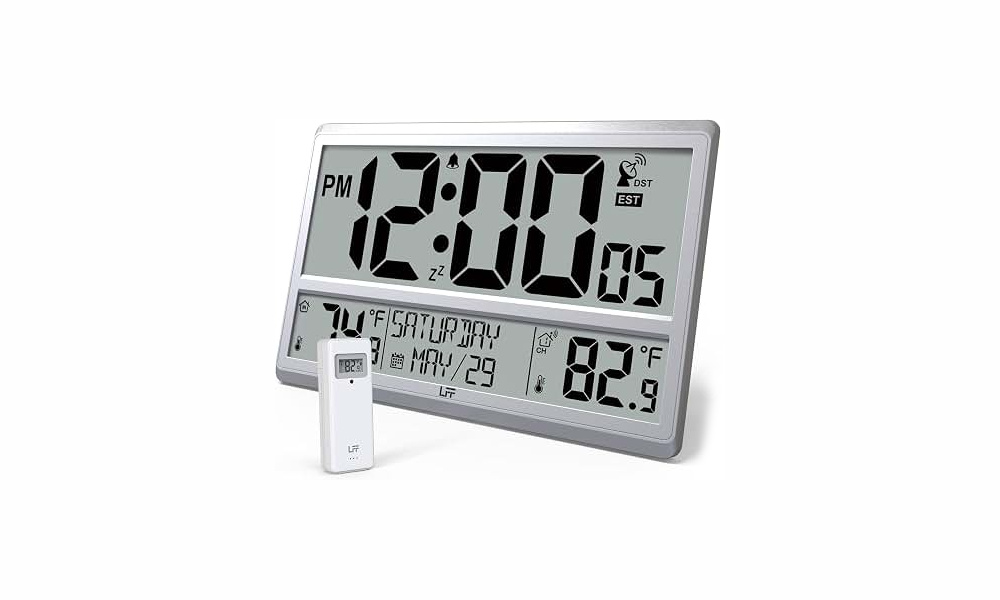
After more than 50 years of occasionally adding an extra second to the world’s clocks, international timekeepers have decided that the leap second has had its day. For radio amateurs, particularly those involved in digital modes, satellite communications and precision frequency measurement, the decision has some interesting implications.
On 15 October 2026, the General Conference on Weights and Measures (CGPM), meeting in Paris, adopted a resolution to move Coordinated Universal Time (UTC) to a continuous time scale.
The decision, made under the auspices of the International Bureau of Weights and Measures (BIPM), means the current practice of inserting leap seconds to keep atomic time closely aligned with the Earth’s rotation will be discontinued.
The change takes effect on 20 May 2027.
It marks a significant development in international timekeeping and recognises the increasingly important role that accurate, continuous time plays in modern communications, computing, navigation and scientific measurement.
What Is a Leap Second?
We tend to think of a day as exactly 86,400 seconds, but the Earth doesn’t rotate with the precision of an atomic clock.
Its rotation varies slightly because of factors including movements within the Earth’s core, atmospheric circulation, ocean tides and changes in the distribution of mass across the planet.
Atomic clocks, meanwhile, measure time using extremely stable atomic transitions.
Since 1972, leap seconds have occasionally been inserted into UTC to keep it within 0.9 seconds of UT1, a time scale based on the Earth’s rotation.
A positive leap second creates the unusual sequence:
23:59:58 → 23:59:59 → 23:59:60 → 00:00:00
Since the system began, 27 positive leap seconds have been introduced, with the most recent occurring on 31 December 2016.
Read more – WIA: https://bit.ly/3WBl2ee



More Stories
WIA: Amateur Radio Takes Centre Stage at FOSDEM 2027 in Brussels!
via Amateur Radio Daily: Special Event Celebrates Efforts of Animal Shelters, Rescuers
Wind-up radios sell out after Labour’s stockpiling call