


During the historic April 8 total solar eclipse, a government radio station in Colorado started sending out slightly shifted “time signals” to millions of people across the globe as the moon’s shadow altered the upper layers of our atmosphere. However, these altered signals did not actually change the time.
As millions of people looked up to the sky to see the moon temporarily (and completely) block out the sun during the April 8 total solar eclipse, the extraordinary cosmic event also shifted invisible “time signals” being beamed from the U.S. across the globe, new data shows. But don’t worry, these altered signals did not result in any changes to the time we observed during or after the event.
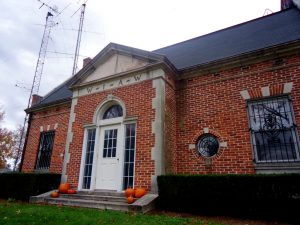
The shifted time signals came from the WWV radio station — a National Institute of Standards and Technology (NIST) facility located in Fort Collins, Colorado, that monitors and broadcasts high-frequency radio waves.
WWV, which is jointly operated by NASA’s Ham Radio Citizen Science Investigation (HamSCI), constantly broadcasts a special signal embedded with “digital time codes” to millions of receivers around the world. Devices that pick up this signal interpret the digital codes embedded within the transmission and use them to stay in sync with NIST’s atomic clocks, which serve as the gold standard for all U.S. timekeeping.
Read more – LiveScience:

More Stories
via Amateur Radio Daily: ISS SSTV Weekend Sprint
via the ARRL: Remembering Four Silent Keys
JTTY Digital Mode: WSJT-X 3.2 Brings RTTY-Style Speed