




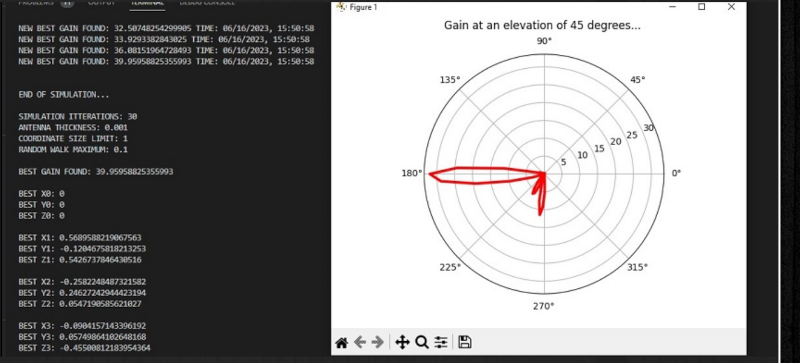
 If you want to simulate a tic-tac-toe game, that’s easy. You can evaluate every possible move in a reasonable amount of time. Simulating antennas, however, is much harder. [Rosrislav] has been experimenting with using simulated annealing to iterate antenna designs, and he shares his progress in a recent blog post.
For many problems, it simply isn’t possible to try all possible inputs to determine what provides the “best” result. Instead of trying every single input or set of inputs, you can try random ones and discard all but the best guesses. Then you make small changes and try again. The only problem is that the algorithm may lock in on a “local maximum” — that is, a relatively high value that isn’t the highest because it forms a peak that isn’t the highest peak. Or, if you are looking for a minimum, you may lock on to a local minimum — same thing.
via Blog – Hackaday https://hackaday.com/2023/06/18/better-antennas-via-annealing-simulated/



More Stories
via Hackaday: A UPS For Your Pi That’s a Little Different
via Hackaday: How High-Voltage Current Transformers Monitor the Grid
via Hackaday: Raspberry Pi Locks Down RAM Upgrades