

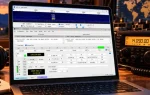



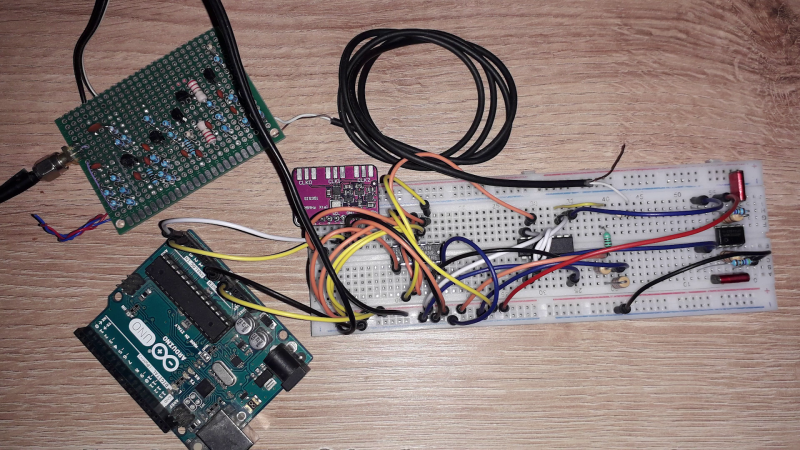
 One of the best ways to learn about radios is to build your own, even in the age of cheap SDR dongles. [Aniss Oulhaci] demonstrates this with a simple HF SDR receiver built on a breadboard.
The receiver takes the form of a simplified Tayloe detector. An RF preamp circuit amplifies the signal from a shortwave antenna and feeds it into a 74HC4066D analog switch, which acts as a switching mixer. It mixes the input signal with the local oscillator’s I and Q signals to produce the intermediate frequency signals. The local oscillator consists of a SI5351 clock generator with a 74HC74D flip-flop to generate the I and Q pair. The signals pass through a low pass filter stage and get amplified by an LM358 op amp, resulting in the IQ signal pair being fed to a computer’s stereo sound card.
via Blog – Hackaday https://hackaday.com/2022/08/26/simple-breadboard-sdr-for-shortwave/


More Stories
via Hackaday: The Heavy Disco-Ball Satellite Designed to Do… Nothing
via Hackaday: Sony’s First Computer
via Hackaday: How to Avoid Getting Arc Flashed